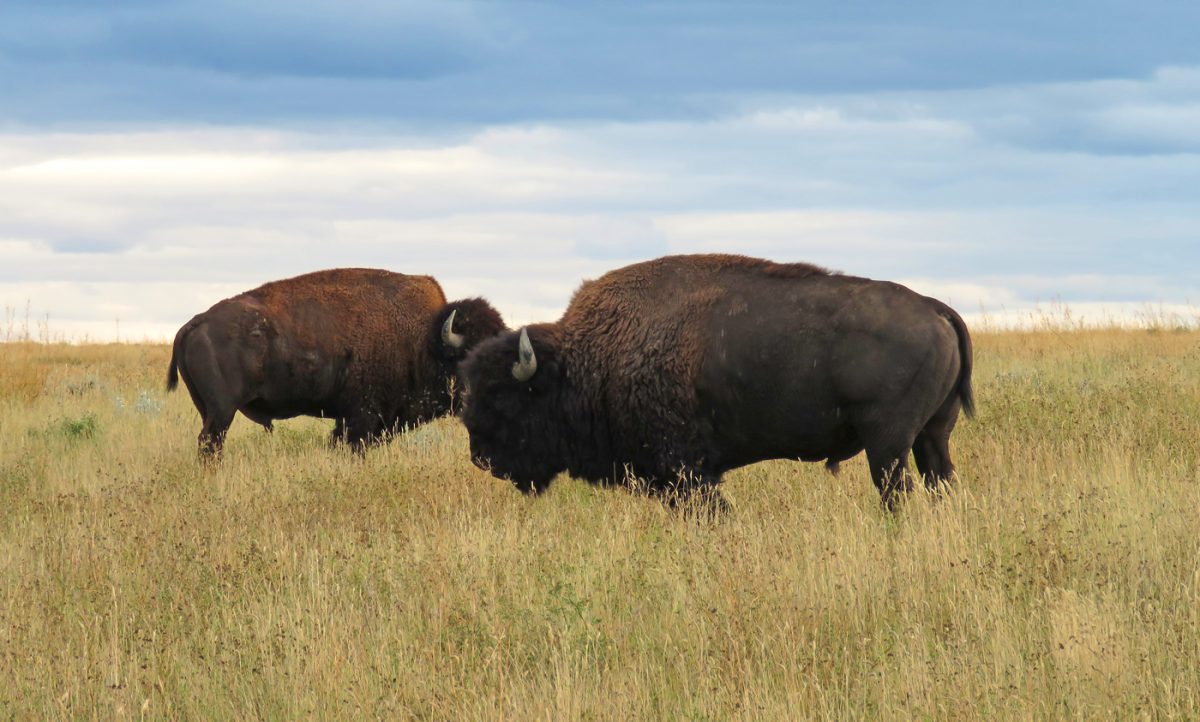
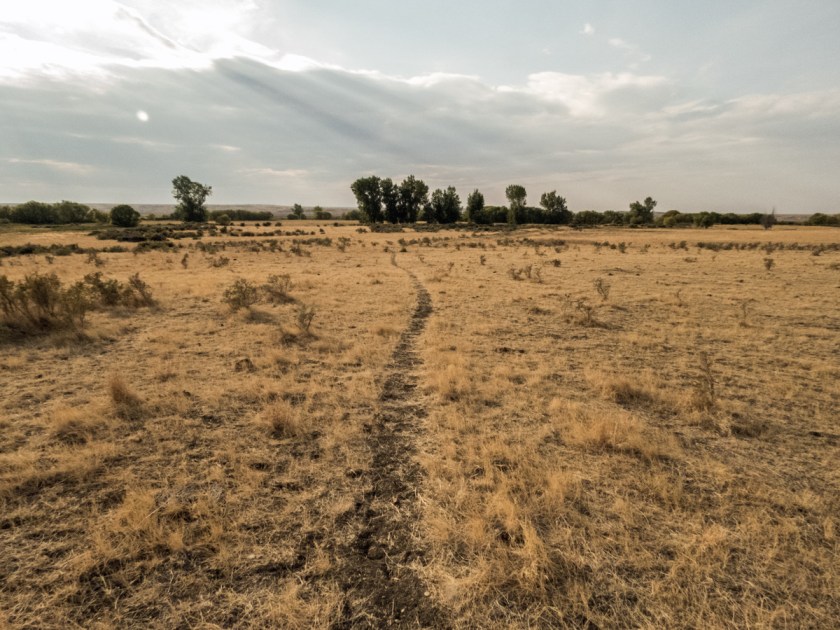
My fourth trip following bison tracks from past to present is over. The unpacking part starts now: not just camping and photography gear, field sketches and notes, but also new perspectives and stories from people who know bison history and bison from intense exposure.
I followed this trail to inform an artist-in-residence project. I have met historians, archeologists, geologists, bison managers, rangers, restorationists, communicators, and interpreters. I have put thousands of miles on my car and truck. And I have only started. Bison trails are more straight and true than their historic path from the Ice Age to today.
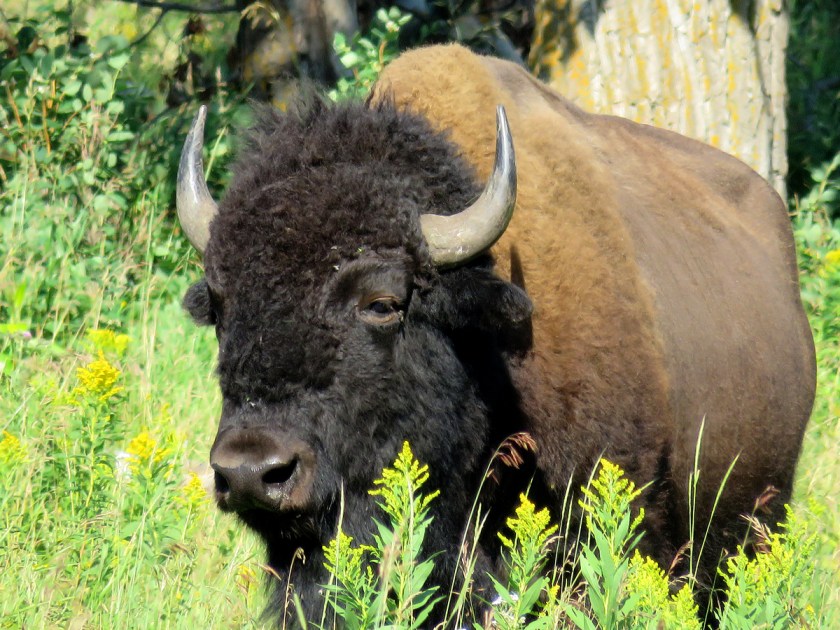
It wasn’t until I picked up a book at First People’s Buffalo Jump in Montana that I learned about the Pablo-Allard herd and Canada’s contribution to saving wild bison. It wasn’t until I talked to a historian at Elk Island National Park in Alberta that I learned there was once a Buffalo National Park that failed miserably. At Elk Island, the superb interpreters revealed how challenging it is to manage bison on defined land base within fences. Despite a robust relocation program that most recently airlifted bison to Banff National Park, Elk Island completed public outreach on alternatives to control the population, including hunting in the park.

One constant is the type of people involved with bison. They are passionate, committed, and generous with their knowledge. They want people to be drawn to bison, to make them an integral and eternalpart of our natural heritage. “Bison nerds” are a small but tight international group committed to making sure that these animals don’t disappear forever. They are ecologically extinct — there are no free-roaming herds — but conservation herds shaped by nature still dot the landscape.
Since these large, migratory animals spread across North America, driving grassland ecology, the bison trail leads to a variety of landscapes and places, . 

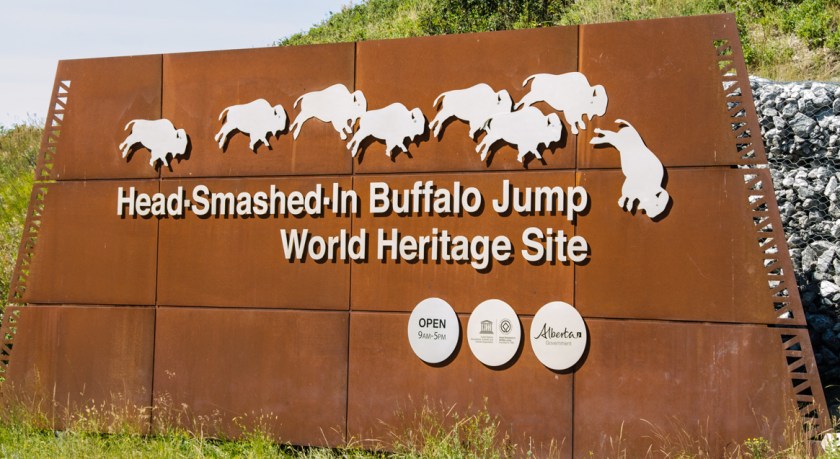
 Plains Indian tribes followed these animals across North America, leaving their own trail, including camps, kill sites, and ritual locations. My first visit to a buffalo jump led to places where I could understand communal hunting, from Madison Buffalo Jump to the superb Head-Smashed-In Buffalo Jump. This World Heritage site is the best preserved in the world with a phenomenal interpretive center.
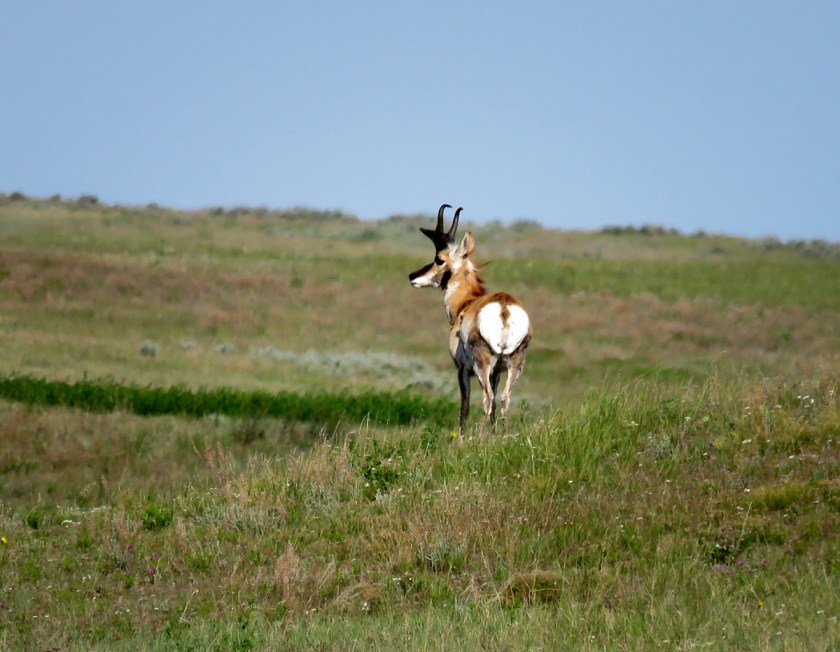
Buffalo led a huge parade of life in their wake as they shaped the landscape. I caught sight of many creatures that followed bison, but wondered about all the animals that disappeared with wild bison.
Along the way, I have met so many wonderful, caring, and friendly people; walked so many beautiful landscapes; imagined the sounds and sights of prairies once teeming with life. It is hard to unpack it all and assemble the important bits into a story that will inspire others to experience the buffalo trail for themselves. But I will try.
 Disasters aren’t disasters without images of people’s damaged belongings. After a flood, our screens scroll images of drowned livestock, crushed barns, mangled cars, crumpled roads and bridges. Earthquakes shear highways and splinter houses into junk piles with people trapped underneath. The awful feeling wouldn’t be there without us; it would just be an event.
 The speeding automobile smears the landscape into a monotonous panorama stretching for hours. We grow stiff from sitting and it seems endless. But speed did not create this impression of the prairie. Even settlers who rumbled along in wagons or on foot didn’t see the complexity of the landscape. There seem to be more books about hard life than prairie songs on the shelves.
 Innocence is the culprit, aided by fear. Powered by animal or fuel, we travel the prairie as if in a foreign land. It looks different from our homes. The sky looms larger, with a hundred-mile view of circling weather and no hint what it means to us. Cacti lurk on the ground and rattlesnakes in the sage. The prairie has a different rhythm that enchants the curious or unnerves the timid.
 Each journey to dry country fills my eyes with the richness of seemingly barren land. This trip is my first as an artist to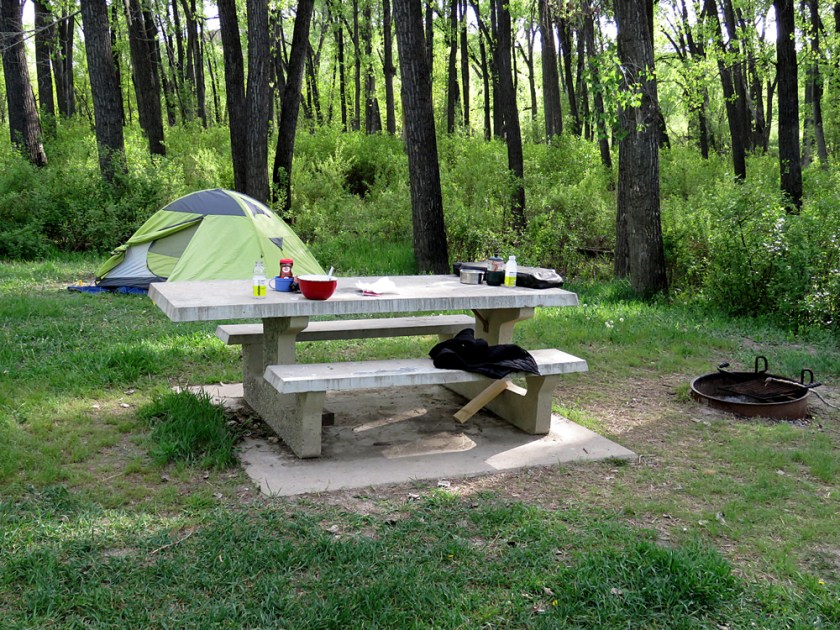


 My car also displayed the damage of regular life.

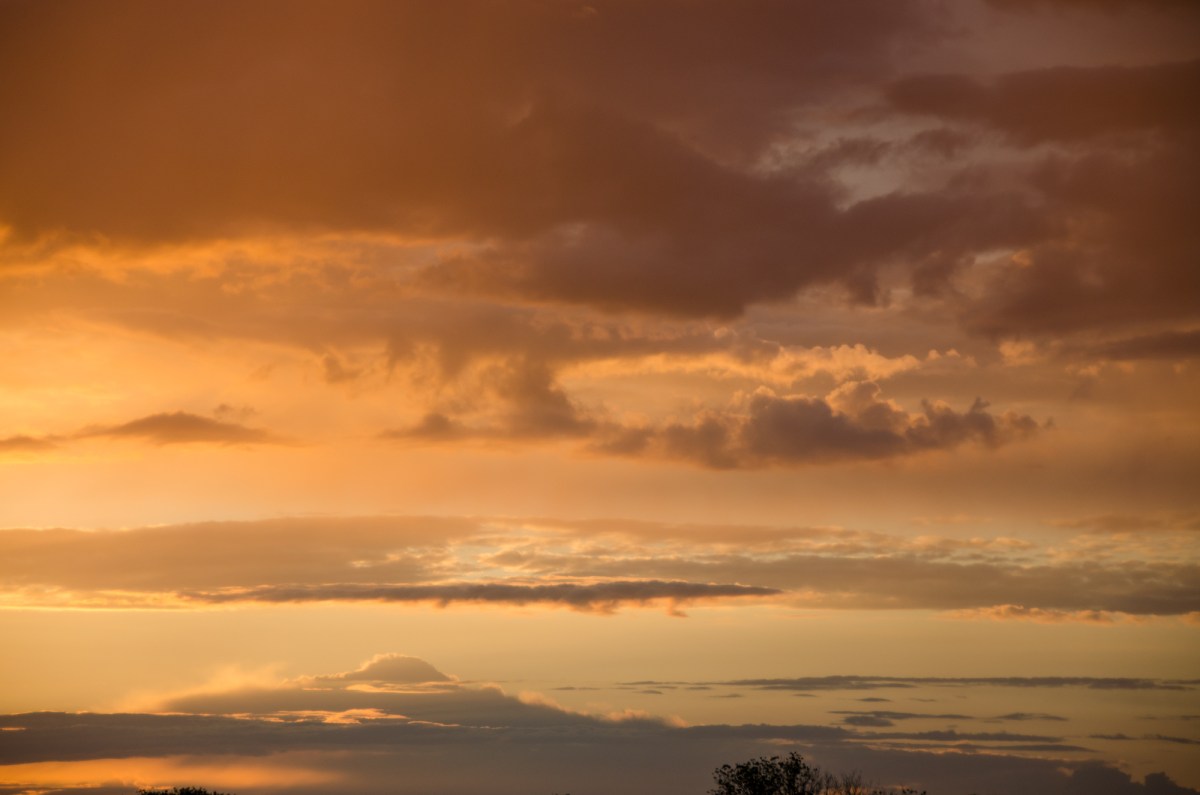
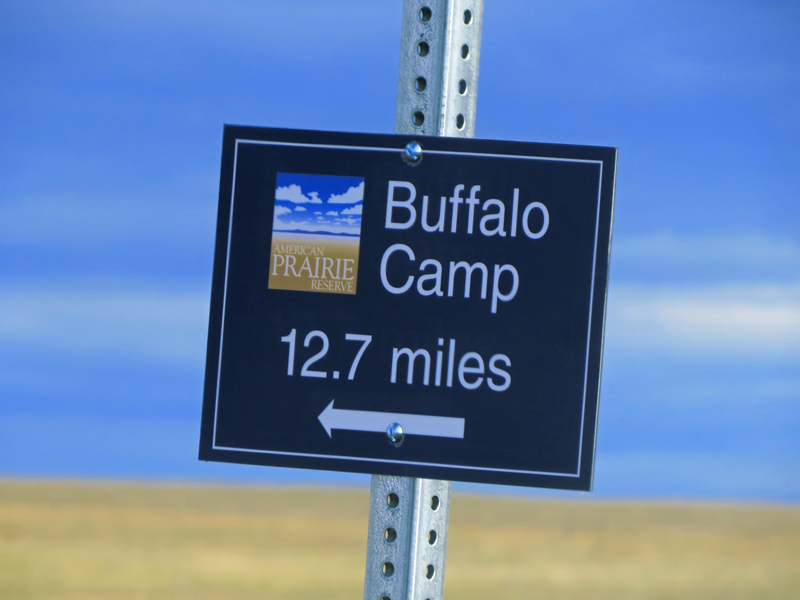 In the end, he wished me a good vacation and I continued my journey to Buffalo Camp. I set up my tent and sat down for dinner, watching the sun set over rich barrens ripe for exploration.

 Larkey Skip